Fueling the Future with Sustainability

At MBRF, sustainability is a strategic pillar that guides our vision for the future and how we produce food, generate value, and interact with society.

Our strategy is anchored in objective goals aligned with key international benchmarks and best ESG practices, promoting a more resilient, inclusive, and low-carbon value chain. Transparency, integrity, and dialogue with stakeholders underpin this commitment.

Governance for this area is ensured by the Board of Directors, which is responsible for defining strategic guidelines and ensuring adherence to global best practices. The Sustainability Committee, composed of independent members with recognized expertise in ESG, supports and advises the Board, contributing to decisions that drive the sustainable development of the business.


Our strategy reflects MBRF’s ambition to lead the sustainable transformation of the food sector, contributing to a production model that respects the planet, strengthens communities, and ensures quality and safety for consumers worldwide.

Sustainability Platform

Through the Sustainability Platform, we work to reconcile productivity with the preservation of natural resources and biodiversity. The company adopts practices that protect biomes, promote animal welfare, and respect human rights. The initiatives include the efficient use of water and energy, better use of food, reduction of greenhouse gases, and responsible supply chain management, focusing on origin control, combating deforestation, and promoting social inclusion.

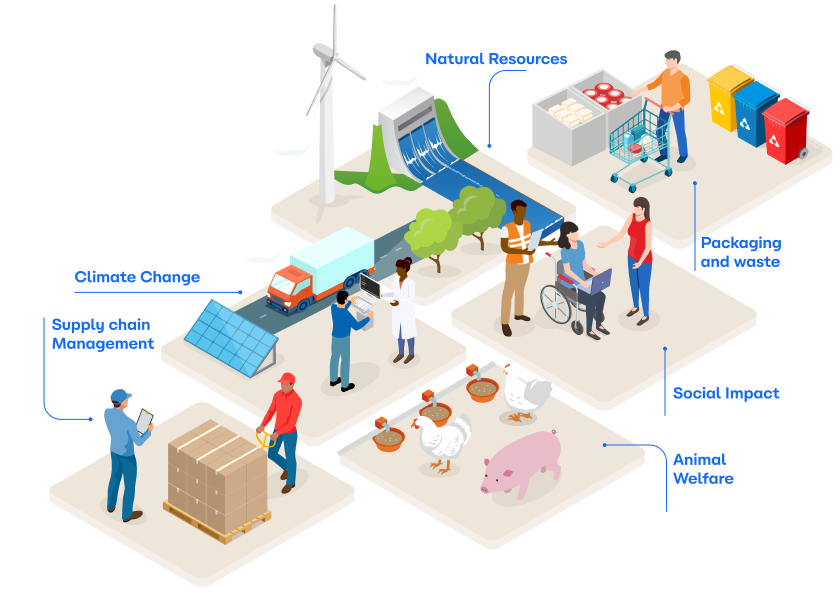
Our Sustainability Platform is structured around six pillars:

Supply Chain Management

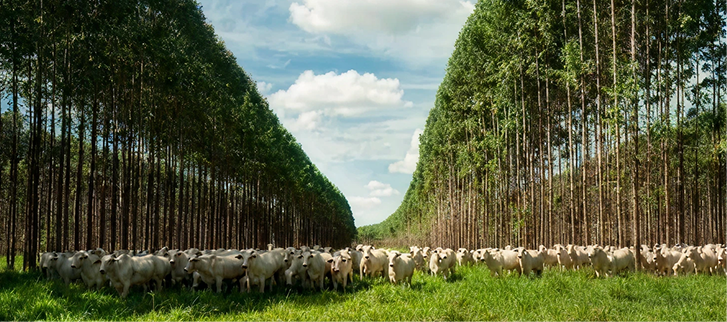
Through the Verde+ Program, MBRF is committed to ensuring a 100% monitored supply chain, free from deforestation and with low carbon emissions. The program is based on the principles of production-conservation-inclusion and rests on three pillars: adoption of monitoring and traceability technologies; technical assistance; and development of financial mechanisms.

Material topics: 1,2,3,4,6,7,8,9,10 

Learn more

Climate Change

To mitigate the effects of climate change and contribute to strengthening a low-carbon economy, the MBRF has established commitments and targets for reducing greenhouse gas emissions. The climate challenges were validated by the Science Based Targets initiative (SBTi) and are aligned with the goal of limiting global warming to 1.5°C, as established in the Paris Agreement. Our action plan is based on four areas of focus: a deforestation-free supply chain, low-carbon agriculture, energy transition, and operational efficiency, and we have taken concrete steps in this direction.

Material topics: 1,2,9

Learn more

Animal Welfare

We adopt high standards of animal welfare throughout the entire production chain. We have commitments regarding the raising of poultry, swine, and cattle, guided by national and international guidelines to promote proper care and humane slaughter, both in our operations and in the supply chain.

Material topics: 8,9   

Learn more

Natural Resources

We continuously work to optimize the use of water, energy, and resources, ensuring the resilience of operations and contributing to the preservation of the ecosystems where we operate. We adopt and encourage our supply chain to employ advanced technologies, continuous monitoring, and process improvement to reduce environmental impacts and increase efficiency.

Material topics: 1,2,9

Learn more

Waste and Packaging

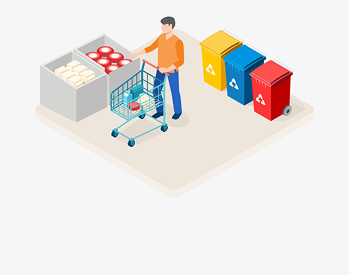
We work to increase the recyclability of materials and promote more responsible consumption and disposal models. We are also continuously improving waste management in our operations, prioritizing reduction at the source, reuse, and environmentally sound disposal, always in accordance with best practices and applicable legislation.

Material topics: 2,10

Learn more

Social Responsibility

We promote a diverse and inclusive work environment, focusing on social well-being and strengthening communities. Our commitment to social responsibility also extends to the value chain, through the reintegration of suppliers. We work with the community through the MBRF Institute, which is responsible for coordinating our investments and social impact projects.

Material topics: 3,4,5,6,7,9,10

Learn more

Subject Matters:

1. Climate Change
2. Natural Resources
3. Human Rights and Labor Relations
4. Health, Safety and Well-being
5. Product Quality and Safety

6. Communities surrounding operations
7. Ethics, Integrity and Transparency
8. Animal Welfare
9. Value Chain Management, Transparency and Traceability
10. Solid Waste and Packaging

Commitments and goals

Supply Chain Management

2025

Completed

100% deforestation-free supply chain across the Amazon, Cerrado and other biomes — covering both direct and indirect suppliers (cattle and grains).

Climate Change

2030

In progress

Achieve 100% renewable electricity
across our operations.

2032

In progress

Reduce Scope 1 and Scope 2 emissions from our poultry and swine operations by 51%*.
*The target is from a 2020 baseline year.

2032

In progress

Reduce Scope 3 emissions from our poultry and swine operations by 35.7%*.

*The target is from a 2020 baseline year.

2035

In progress

Reduce Scope 1 and Scope 2 emissions
from our beef operations by 68%*.

* The target is from a 2019 baseline year.

2035

In progress

Reduce Scope 3 emissions intensity across our value cattle production chain by 33%*.

*The target is from a 2019 baseline year.

Animal welfare

2025

Completed

Audit 100% of our production sites for animal welfare.

2025

Completed

Source 100% of eggs globally from cage-free hens.

2026

In progress

Implement environmental enrichment across 100% of our integrated poultry and swine operations.

2026

In progress

Implement 100% group gestation stalls for sows by 2030. Since 2026, all new sow housing projects have adopted group housing systems.

Natural Resources

2025

In progress

Reduce water consumption intensity in our poultry and swine operations by 13%.

2030

In progress

Reduce total water consumption in our beef operations by 20%.

Social Responsibility

2030

In progress

30% of women in senior leadership positions.

Leadership in ESG indices and rankings

The commitment to the sustainability agenda has positioned MBRF among the best-performing protein companies in independent global indices focused on ESG.

Triple A! Eight companies, out of more than 22,000 worldwide, received the Triple A rating — and we are among them. We achieved the maximum score (grade A) in all three categories.  

We are the only beef protein company classified as low-risk in sustainability and the highest-ranked among chicken producers, out of 60 companies evaluated globally in the animal protein sector.

We are part of the B3 Corporate Sustainability Index (ISE). ISE brings together companies recognized for their advanced sustainable management and corporate governance practices.

We are part of the Carbon Efficient Index (ICO2), both from B3. ICO2 highlights companies whose performance is aligned with carbon efficiency and transparency in emissions management, encouraging the transition to a low-carbon economy.

We are among the highest-rated companies in the sector in the Forest 500.. The index analyzes the commitment and transparency of the world’s largest companies and financial institutions in combating deforestation associated with agricultural commodities.

We have earned the Gold Seal from the Brazilian GHG Protocol Program., the highest level of certification awarded to companies that meet the transparency criteria in disclosing their greenhouse gas emissions inventories.

We are the best-positioned company in the sector according to the Global Child Forum Benchmark (GCFB), joining the select group of companies classified in this category. Leader (Leader).

We are among the best-positioned companies in the sector in the Business Benchmark on Farm Animal Welfare (BBFAW). Globally recognized, the BBFAW assesses the management, corporate commitment, performance, and transparency of food companies regarding the welfare of farm animals.

We are the best-positioned company in the sector according to the S&P Corporate Sustainability Assessment (CSA)., an assessment conducted by S&P Global that analyzes companies’ performance based on environmental, social, and governance criteria.

Content Center

Consult our Policies, Guidelines, and Reports in our Content Center.