




MBRF operates with a commitment to promote social development, strengthen communities, and ensure decent working conditions across its entire value chain. Our initiatives are guided by robust policies, international standards and clear goals, which guide everything from the promotion of human rights to socioeconomic inclusion and strategic social investment in the territories where we are present.

Focusing on positive impact, we work side by side with employees, suppliers, producers, partners, and communities, expanding opportunities and contributing to a fairer and more sustainable society.

Our areas of focus


Human Rights

We guarantee respect for and protection of human rights at all stages of our value chain, preventing and combating any form of violation.

Diversity, equity and Inclusion

We promote diverse, safe, and inclusive work environments, valuing different histories, perspectives, and cultures.

Socioeconomic Development

We work to strengthen the territories where we are present, encouraging income generation, opportunities, and local social improvements.

MBRF Institute

Leader in social initiatives aimed at combating food waste. Promotion of food security and employee engagement through volunteering

Human Rights

MBRF adopts international standards and strict policies to ensure the protection of human rights in its operations and supply chain.

We repudiate any form of child labor, forced or analogous to slavery, with consistent mechanisms for prevention, monitoring, and response.

How we operate

Continuous evaluation of the units:

We regularly monitor all our plants and operations to ensure decent working conditions and compliance with internal and legal regulations. We base our assessments on widely recognized international references such as SA8000, a global social responsibility standard developed by Social Accountability International (SAI), and SMETA (Sedex Members Ethical Trade Audit), the world’s most used social audit methodology, created by Sedex (Supplier Ethical Data Exchange).

Strict protocols for suppliers:

Before and during the commercial relationship, we conduct documentary analyses, checks in official databases, and geospatial monitoring to prevent improper practices.

Immediate actions in case of irregularities:

Upon identifying any violation, we block the supplier and terminate the business relationship, resuming it only after full regularization when applicable.

Continuous training for employees:

We promote mandatory training on human rights, ethics, and the Code of Conduct, strengthening a culture of respect and active vigilance.

National Pact for the Eradication of Slave Labor

Awareness and business mobilization initiative against forced labor in supply chains that helps us improve our practices, policies, and our Socioenvironmental Risk Mitigation Map.

On the Right Track Program

MBRF became a supporter of the Na Mão Certa Program, signing the Business Pact to End Sexual Violence against Children and Adolescents and undertaking the commitment to incorporate the issue into its social responsibility strategy.

Diversity, equity and Inclusion

We work to build inclusive environments that value different stories, cultures, and paths. Our actions focused on four minority groups: women, people with disabilities, Black people, and foreigners/refugees; the company was recognized as one of the largest employers of the latter group in Brazil. All our career programs have specific openings for these groups.

Unified global DE&I strategy with clear corporate policies.

Specific gender equity programs, such as Lidere como uma Mulher, Entre Eles and Elas em Foco (Lead Like a Woman: Focus on Men and Women).

13 thousand migrants in the workforce, with integration programs, linguistic training, and support for professional validation.

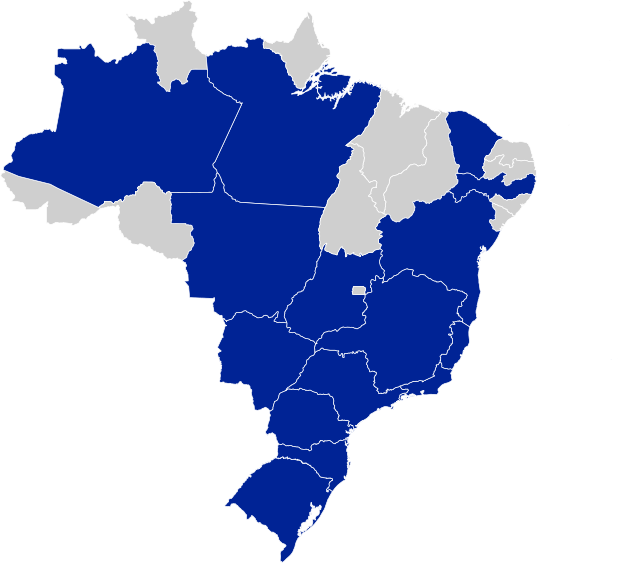
More than 300 diversity ambassadors in units throughout Brazil.

Internal campaigns reaching over 100,000 people and webinars with specialists.

Training in Libras and digital accessibility initiatives.

Strategic Partnerships

United Nations High Commissioner for Refugees (UNHCR)

With 50 organizations from different sectors committed to combating structural racism and promoting racial equity.

It reinforces our commitment to employability, training, and cultural integration.

HuB of the Refugee Companies Forum (in partnership with SESI).

Socioeconomic Development

Contributing to the development of the territories where we operate is a central part of our social strategy. This involves ongoing dialogue with communities, institutional partnerships, volunteering, and actions to foster economic and social empowerment.

We believe that generating value for society—in an ethical, transparent, and responsible manner—is essential both for the well-being of current and future generations and for the sustainability of our business environment. For this reason, we seek to strengthen our relationship with all audiences in our ecosystem: communities, employees, suppliers, integrated producers, partners, and other stakeholders.

This action materializes into concrete results:

Reinclusion of producers and support for socio-environmental regularization.

Employment and income generation for more than 130,000 employees globally.

After-school projects, public health support, donations and social campaigns.

Relationship with more than 7,000 integrated producers and 425,000 customers and suppliers.

Community Connection Program, strengthening the dialogue between company, government, and society in local communities.

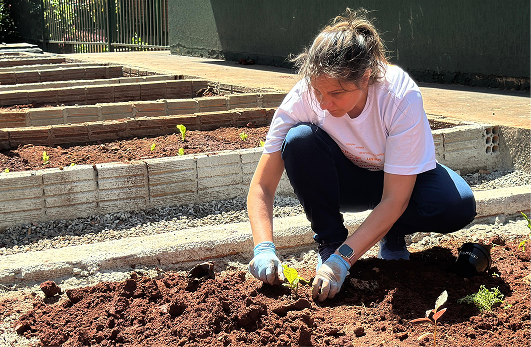
Volunteer actions that benefit hundreds of people.

Emergency support and reconstruction via + Junto Pelo Sul (Together for the South).

Socioeconomic inclusion of suppliers

We foster the socioeconomic inclusion of producers and reintegrate blocked suppliers after they regularize their operations, once again ensuring compliance with our sustainability criteria.

By promoting this reinclusion, we directly contribute to the socioeconomic recovery of producers and to enhancing environmental sustainability on their properties. This approach avoids loss of income, protects local jobs, and reduces the risk of opening new areas, strengthening the entire agribusiness chain in a responsible and continuous way.

MBRF Institute

For 14 years, the MBRF Institute has coordinated the transfer of direct investments for the development of projects in the territories and manages the volunteer program. More than 3.8 million people have already been impacted by the Institute’s initiatives, which have already mobilized 50 thousand volunteers in four thousand social initiatives across Brazil.

The actions of the MBRF Institute are structured around two major fronts:

Food that Transforms:

Promotion of food security, waste reduction, and productive inclusion.

Zero Loss Challenge
Program that accelerates local solutions to reduce losses and waste along the food chain. In partnership with the MBRF Hub, the project supports municipalities in creating practical initiatives such as reuse centers, community kitchens, solidarity markets, and logistical platforms for redistributing food suitable for consumption.

Partnerships with food banks and platforms such as Acelera ESG:
MBRF strengthens its actions to fight food waste through partnerships with food banks—responsible for collecting and distributing rescued items—and with the Acelera ESG platform, which connects donors, carriers, and cooperatives to beneficiaries, making the process more efficient, increasing social impact, and promoting the circular economy. These partnerships make the process more efficient, generate direct social impact, and stimulate the circular economy, strengthening businesses and communities.

Education for the Future:

Strengthening education and sports, expanding professional prospects for young people and adults.

Language Circuit:
The Program that offers Portuguese courses for migrants and Spanish courses for Brazilians, strengthening communication, cultural integration, and humanized service in public and community services.

Tomorrow’s Professionals:
Initiative aimed at young people, providing financial education, preparation for the job market, and the development of essential competencies for professional life.

My Life Under Construction:
Project carried out with universities to offer vocational guidance to high school students, supporting the creation of life projects and the development of social-emotional skills.

Multiplying $
Financial education initiative aimed at the community, with activities in schools and public events to promote financial autonomy and family planning.

Sports Projects (Golden Pen Athlete, Basket in Education, Tennis Network)
Set of initiatives that use sports as a tool for education, social inclusion, and the development of children and adolescents, combining sports activities, school support, and the encouragement of socio-emotional skills.

Corporate
volunteering

The Corporate Volunteer Program, managed by the MBRF Institute, mobilizes employees in social impact actions in the municipalities where the company is present.

Through 50 local committees made up of volunteers from various fields, the Institute provides development pathways and guides the organization of initiatives, strengthening internal engagement and relationships with communities.

To learn more about the actions, initiatives, and projects of the Instituto MBRF, visit:
https://www.institutobrf.com/