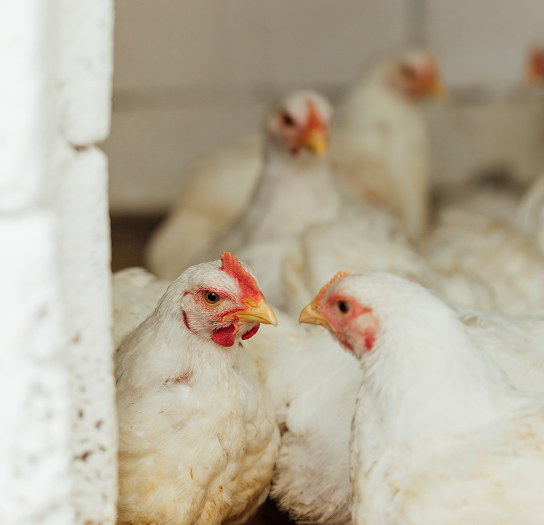
MBRF reinforces its commitment to the most advanced animal welfare practices, working in an integrated way to guarantee increasingly higher standards throughout the chain. The company aligns its actions and processes based on globally recognized principles.
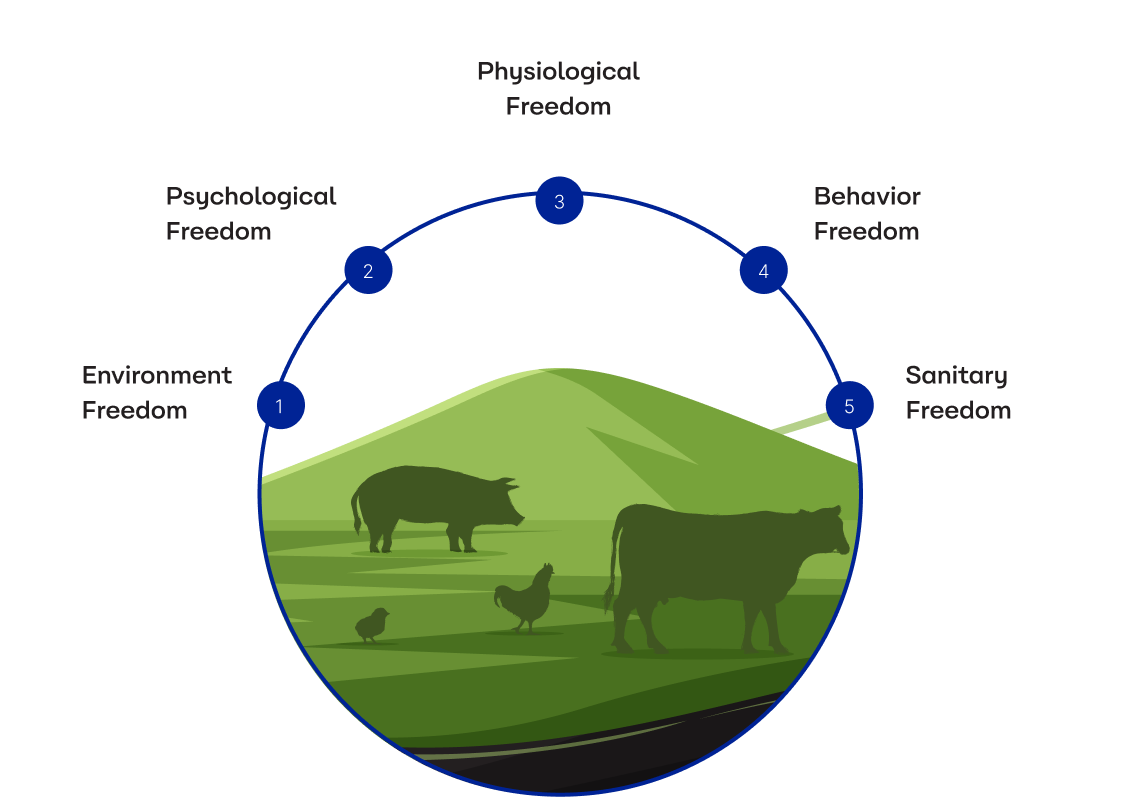
Our work in animal welfare is guided by the five freedoms defined by the Farm Animal Welfare Council, an independent British council that is a global reference in animal welfare, as well as the five domains (nutrition, physical environment, health, behavioral interactions, mental state) that consider the physiological states of animals, their behavior, and their mental states. This concept is an evolution of the five freedoms developed in 1979 by the Farm Animal Welfare Council (FAWC).
These areas, incorporated into MBRF’s policies and monitoring systems, ensure synergistic action focused on continuous improvement, shared responsibility, and the strengthening of ethical practices throughout the supply chain.

Nutrition
Consuming adequate, nutritious foods can be a pleasant experience.

Health
Care that ensures robustness and vitality.

Environment
Good conditions that offer comfort and safety.

Mental state
Prioritize comfort, interest, and trust, and avoid negative experiences.

Behavior
Varied activities and rewarding challenges.
For more information about our results, please visit our Animal Welfare Report.
Learn about our animal welfare guidelines by accessing our Global Animal Welfare Policy.
Highlights
100%
of slaughter units audited according to international animal welfare standards
100%
of the birds in the integrated system integrated system
100%
of the eggs used in our operations come from cage-free hens
Audits based on the NAMI and NCC protocol
Our facilities are approved by third-party companies following the NAMI, NCC, and other animal welfare protocols, including customer-specific ones. The results reflect our efforts and commitment to best practices in this area.
Our practices
Our commitment to animal welfare translates into robust and specific practices adapted to each species and aligned with best technical recommendations, promoting ethical handling and appropriate conditions in our operations and supply chain.

Birds

Space for movement
The company adopts strict density limits for housing the birds, aligned with European guidelines, and a significant portion of the chickens slaughtered globally are raised in lower density conditions, ensuring more space for movement and well-being.

Cage-free
All the birds are raised cage-free. Fertile egg-laying hens have access to nests, allowing for natural behavior. The eggs sold are 100% cage-free, as the company does not produce commercial eggs, only infertile eggs.

Food
Chickens and turkeys have continuous access to water and receive feed formulated by nutritionists, tailored to each stage of their development.

Suitable temperature
Thermal comfort is ensured by specific equipment, with daily monitoring of maximum and minimum temperatures and humidity.

Rest
The birds follow a controlled light cycle, with a minimum of 8 hours of light and 4 hours of darkness per day, adjusted according to each stage of breeding.

Respect for local criteria
The production meets cultural, religious, and market demands, including specific customer requirements and certifications.

Physical changes
Broiler chickens, turkeys, and breeding stock do not undergo physical changes during their lifetime.

Transport
Transportation follows corporate guidelines, with advancements in the use of cages with anti-opening locks and a preference for trips of up to 4 hours.

Assessment and management
All animals are evaluated upon arrival at the factory, and handling is carried out by professionals trained in animal welfare.

Cattle

Structure and thermal comfort
In our facilities, we provide high-quality food and water in sufficient quantity to satisfy all the animals’ needs. We ensure adequate stocking density and use non-slip flooring and sprinklers to cool the animals housed in the industrial areas without disturbing them. Many units also have shading systems (with specific coverings), properly positioned, that ensure air circulation and the comfort of the animals.

Equipment
Our facilities are equipped with state-of-the-art restraint and pre-stunning equipment, properly maintained, which, together with recommended parameters and trained personnel, contributes positively to the effectiveness of stunning.

Training and capacity building
Training in our own operations globally, as well as technical visits to properties and training for loading, handling, and identification of indicators.

Monitoring
Frequent monitoring of units via checklists, cameras, and third-party audits.
Transport
The transportation of animals between the supplying farms and the operational units is carried out strictly following best practices and principles, which we disseminate among our transporters. We do a lot of work to raise awareness among this audience, which includes training and visits to the units. In parallel, we have adopted actions to monitor and evaluate the services provided.

Responsible use of antibiotics
Do not routinely use medications for prophylactic (non-therapeutic) purposes, and require a prescription from a qualified professional.

Supply chain
We guide suppliers on animal welfare practices, including materials, visits, and checklists, and encourage the acquisition of certifications.

Pigs
Assessment and management
All pigs are assessed upon arrival at the factory, and handling is conducted by professionals trained in animal welfare.

Freedom in the facilities
Following European guidelines, fattening pigs have freedom of movement within the facilities.

Weaning
Weaning occurs at a minimum age of 21 days, with 25 days being the average practice.

Castration
Only 0.17% of pigs require surgical castration, always under anesthesia. Approximately 99.83% of males undergo immunocastration, without surgery. The goal for 2025 is to achieve 100% immunocastration. Sows are not castrated.
Physical changes
There is no ear cropping (denting). Tail docking is performed by the third day of life in 100% of integrated animals to prevent cannibalism. The company has already started testing analgesia, which is still undergoing efficacy validation.

Collective gestation
Collective gestation is mandatory in expansion projects. The commitment is to reach 100% of sows in group gestation pens by 2026.
Transport
All vehicles transporting pigs are traceable, monitored, and equipped with cameras and fatigue sensors. The trips are scheduled to not exceed 8 hours. The company does not transport live animals by sea and remains committed to this practice.
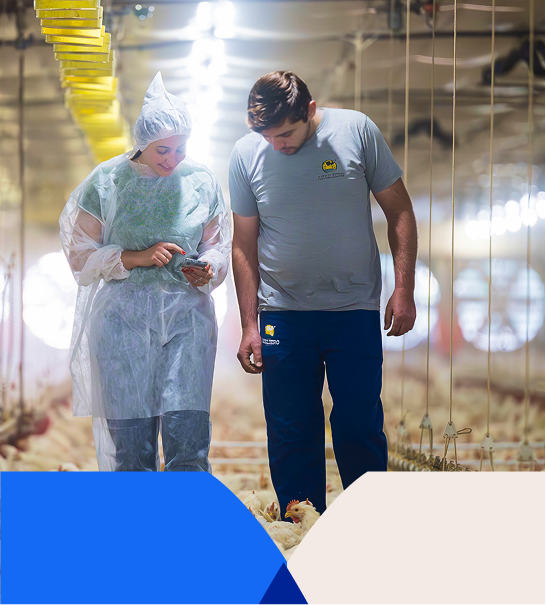
Managing animal welfare in our operations
In managing all our slaughtering or processing units, we follow three main guidelines:

To observe ethical principles and the laws and regulations applicable to the markets in which we operate;

To meet the demands of our customers, distributed across different countries;

To work in partnership with suppliers, transporters, and employees to always comply with best animal handling practices.
The decisions and strategies adopted to manage animal welfare aim to encompass the three main segments of the value chain: farms, transportation, and industrial operations.
Animal Welfare Ambassadors Program
Poultry and pork operations
In 2024, we also launched the Animal Welfare Ambassadors Program, aimed at recognizing, training, and establishing a focal point on the topic within each facility. The ambassadors are responsible for representing and driving animal welfare initiatives across all production segments of their unit, strengthening the culture, creating and sharing related best practices, engaging teams, and keeping up with innovations in the field. In 2024, we held the first ambassadors’ meeting, where around 30 of them gathered to discuss best practices, opportunities, and ways to further embed animal welfare culture across the organization.
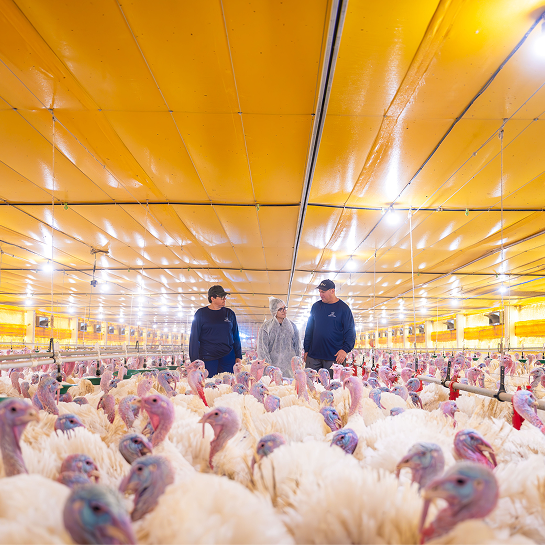
Animal Welfare Professionals
Cattle operations
In our sector, we were pioneers in intensifying animal welfare actions starting in 2004, with the first visit from Dr. Temple Grandin introduced us to our operational units, and later, in 2006, created a department dedicated exclusively to the subject.
With a multidisciplinary background, this structure brings together highly qualified animal scientists and veterinarians, responsible for developing strategies and management improvements; offering technical guidance for the development of appropriate structures aligned with national and international legislation, client protocols, and the company’s voluntary initiatives; monitoring the evolution of indicators, monitoring, committees, decisions, and training related to animal welfare; disseminating results and recommended practices in our annual reports; and encouraging suppliers to adopt high standards, spreading and promoting best practices throughout the value chain.
Animal welfare management in our supply chain:

Integrated suppliers
Poultry and Swine Operations
MBRF’s integrated suppliers are partner rural producers who raise poultry or swine following the company’s standards and technical guidelines, using their own infrastructure, while MBRF provides the animals, inputs, and specialized support.
Since 2023, 100% of these partners have been evaluated according to animal welfare requirements. All third parties involved, including integrated producers, transporters, and loading teams, must comply with the Supplier Code of Conduct, which includes specific animal welfare guidelines, and are also evaluated.
In case of non-compliance with public commitments or animal welfare procedures, sanctions are applied, which may include warnings, failure in audits, or suspension of activities until the deviations are corrected.
During this period, the supplier remains blocked and only resumes its activities after regularization. When non-compliance is considered serious, the supplier is permanently disqualified.

Cattle suppliers
We have developed a series of actions to disseminate best animal welfare practices throughout our beef supply chain. To engage suppliers in these efforts, we offer guidance, guidelines, and incentives. We also have processes in place to monitor progress in adherence to the principles we uphold.
The main actions we have developed to engage our suppliers are:
- MBRF Club Program – An initiative that seeks to strengthen our relationship with producers and encourage the adoption of good livestock practices in accordance with the Sustainable Practices Guide and the MBRF Club Protocol. Through this program, we aim to contribute to the sustainable development of rural properties and ensure safer production with reduced environmental impacts.
- Technical visits – Our animal welfare specialists visit properties to monitor animal loading. During these visits, they make specific records to assess the condition of the properties and evaluate animal handling and facilities.
- Raw material supplier assessment for processed products – Through specific checklists completed during second- and third-party audits, we motivate and engage our suppliers to adopt best practices.
Animal Welfare Excellence Program in the Supply Chain
We are pioneers in providing training for suppliers of products containing animal-origin ingredients, including animal protein served in the cafeterias of our industrial operations. We have a partnership with Compassion in World Farming to deliver a series of training sessions for the supplier chain. The goal of this initiative is to align, disseminate, and strengthen best animal welfare practices across the entire sector.
Recognition
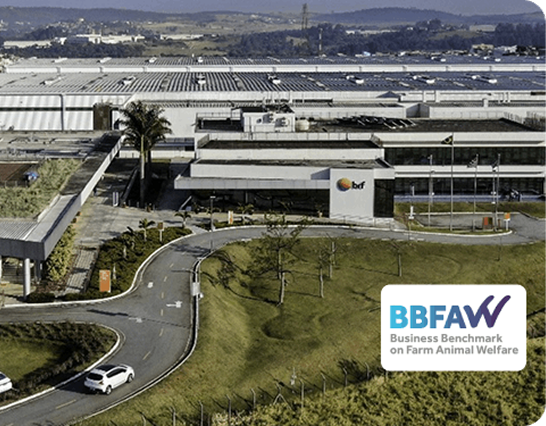
In line with our commitment to establishing best practices in animal welfare in our operations and value chain, we have participated in the Business Benchmark for Farm Animal Welfare (BBFAW) ranking since 2012, the year of the study’s first edition.
Recognized as a global benchmark for farm animal welfare management, this assessment allows investors, companies, NGOs, and other stakeholders to learn about the best practices adopted by companies in the sector and their respective performances. MBRF remains committed to continuing to advance the implementation of best animal welfare practices in its operations, as well as engaging suppliers to adhere to best practices.